Peripheral Blood Smear
A blood smear, also known as a peripheral blood smear or blood film, is a widely used diagnostic laboratory technique used to examine the shape, size, and frequency of the blood components under a microscope. This technique can provide valuable information about the health of a patient and can contribute to the diagnosis of blood-related pathologies such as anemias, leukemias, clotting disorders, and infections.
Making a blood smear (see Figure 1):
-
A droplet of blood is taken directly from a patient (using a finger prick) or from a fresh blood sample and added to one end of a clean microscope slide.
-
Holding a second, clean microscope slide (called the spreader slide) at a
45° forty five degree angle, put the short edge of the slide in front of the blood droplet so that the blood ‘latches’ onto the spreader slide. -
Quickly and smoothly push the spreader slide along the length of the base slide spreading out the blood droplet as you go.
-
The final blood smear should look like a film of blood spread over the slide with a thin ‘feathered edge’ at one end. The cells in the thinnest part of the blood smear will be spread out in a single layer, enabling accurate viewing of the blood components under the microscope.
After the blood smear has been completed it needs to be fixed to preserve the cells in their natural state and avoid artifacts forming:
-
Leave the blood smear to air dry naturally.
-
The blood smear can then be further fixed using a chemical fixative such as methanol.
-
The blood smear will need to thoroughly air dry once again after chemical fixation.
To visualize the blood components the blood smear will need to be stained by one of several common techniques depending on the analysis required and time for the analysis.
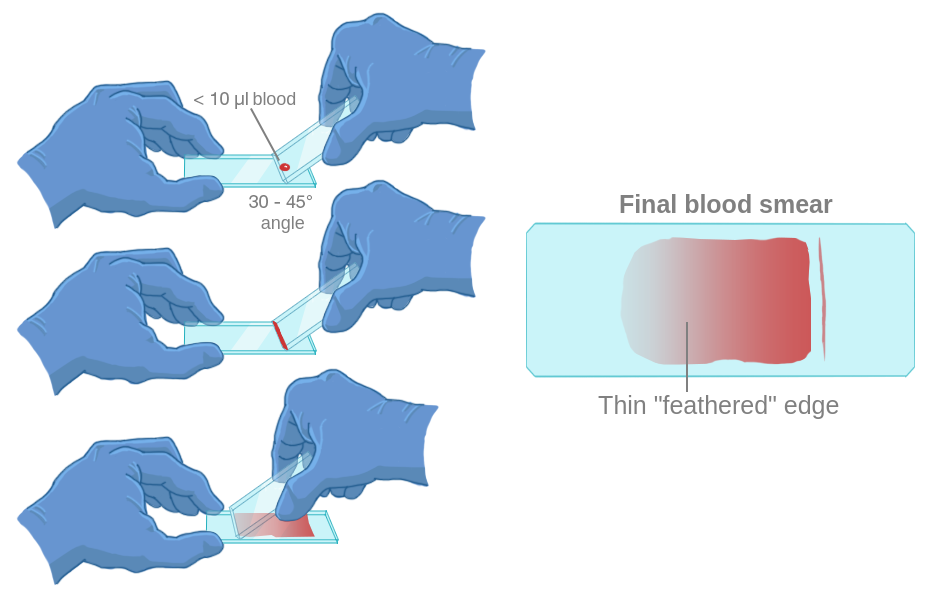
Figure 1. Steps to create a peripheral blood smear.