Complete Blood Count (CBC)
Complete blood counts (CBCs), also called full blood counts (FBCs), are blood tests usually requested to screen for blood diseases or to confirm a diagnosis. This analysis provides information about the cell count of each blood cell type and the concentration of specific blood proteins and minerals. Hematology Analyzers are nowadays used to automatically generate the CBC of a patient's blood. The following values are typically obtained by a CBC:
- Red blood cell count
- Total white blood cell count
- Basophil count
- Neutrophil count
- Monocyte count
- Lymphocyte count
- Basophil count
- Platelet count
- Hematocrit
- Hemoglobin concentration
- Mean corpuscular volume (MCV) - average volume of a single red blood cell
- Mean corpuscular hemoglobin (MCH) - average amount of hemoglobin inside a single red blood cell
- Mean corpuscular hemoglobin concentration (MCHC) - average concentration of hemoglobin inside a single red blood cell
Depending on the value, different units are used (see example CBC report in Figure 1). Certain diseases are characterized by an increase or decrease in the number of blood cells. To facilitate interpretation of the result, references ranges are given behind every value and abnormally high and low values are specifically indicated (e.g. with an H or
Diseases that can be diagnosed with the support of CBC results include anemia (low red blood cell count), bacterial, viral, and parasitic infections (low white blood cell count), as well as leukemia (high white blood cell count), and conditions affecting platelet disorders.
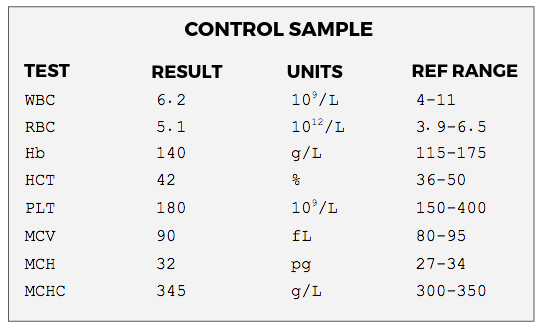
Figure 1: Example CBC result.